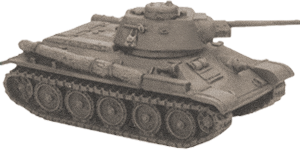
By August of 1942 reinforcements sent to assist Army Group B's drive on Stalingrad had transformed the German Sixth Army from a potent assembly of men and machines to the most powerful army in the world, with 22 divisions and supporting units under the command of General Friedrich Paulus. Facing the Sixth Army, and Fourth Panzer Army's seven German and four Romanian divisions, was a Soviet Stalingrad Front that had been decimated in July.
When thinking of 20th Century coastal gun emplacements, Puget Sound and The Strait of Juan De Fuca don't typically come to mind. However, by the end of the Second World War the approaches to Seattle featured some of the most powerful gun batteries found anywhere in the world. Camp Hayden on The Strait of Juan De Fuca (roughly 20 minutes west of Port Angeles) featured two of the biggest such gun emplacements.
Protection for the U.S. Pacific Northwest and Canadian border region first came to fruition in the late nineteenth century.
In this month's book review we cover Arthur Gullachsen's second volume in his detailed look at the combat operations of the 12. SS-PanzerDivision. In this case delving into its defensive role during June and July of 1944, and in response to the Allied invasion of Normandy, France.
The SS Antilla was a Hamburg America Line cargo ship launched in 1939. She operated in the Caribbean as a cargo ship for Nazi Germany. With a length of nearly 400 feet, beam of 55 feet, and a full load weight of 4,363 GRT (crew of 35) the Antilla was a decent sized merchant ship from that era.
Just before the outbreak of war (in August of 1939) Nazi authorities directed the Antilla (if unable to reach a German port) to seek safety in a neutral harbor. She ultimately anchored in Malmok Bay on the northwest side of Aruba. There she wintered uneventfully.
Though part of Casemate's illustrated series (and packed with illustrations), German Logistics is anything but a mere picture book. It contains ample descriptions regarding how the German system of supply worked, and I think anyone interested in the German way of war circa 1939-1945 will find much to enjoy in its pages.
Michael Claringbould and Peter Ingman have done it again! As noted by our latest review, Volume 3 of their series covering the air war in the South Pacific is a must read for anyone interested in the Battle of the Coral Sea.
The Planning and Preparations for the Battle of Kursk: Volume 1 offers much to chew on for anyone interested in this battle. In this first volume of what is meant to be a two-volume set, the author does a number of things that significantly advance our understanding of the 1943 combat around Kursk. Read on to find out why I recommend this book for my readers.
The Defeat and Attrition Of The 12. SS-PanzerDivision HitlerJugend is meant to be the first of two new books further exploring the armor-heavy battles on the eastern end of the Allied lodgement in Normany. I have just finished it, and recommend it to my readers.
Operation Bagration, An Incomplete Truth offers an in-depth and fresh take regarding how the Red Army finally defeated Germany's Army Group Center, and is a book I believe is worth reading. In this month's book review I explain why.