
The Planning and Preparations for the Battle of Kursk: Volume 1
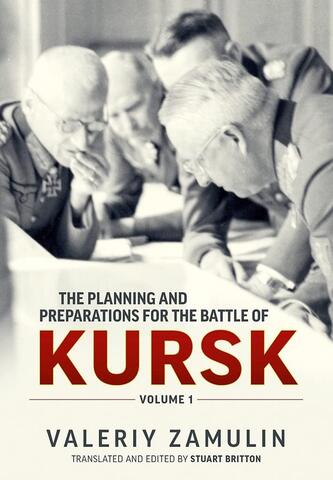
The historiography of the July 1943 Battle for Kursk and the name Valeriy Zamulin are fast becoming synonymous. I have repeatedly reviewed his numerous publications on this topic, and done so for good reason. His research is thorough and his conclusions always add to our understanding as to why and how the Red Army defeated this final truly large scale German offensive (codenamed Operation Citadel) in the war it fought against the Soviet Union.
The Planning and Preparations for the Battle of Kursk: Volume 1 is no different in offering much to chew on for anyone interested in this battle. In this first volume of what is meant to be a two-volume set, the author does a number of things that significantly advance our understanding of the 1943 combat around Kursk. He begins his look well before the events of July 1943, setting the stage for the reader by examining the condition of the German and Soviet forces following the Soviet 1942-1943 winter campaign. He starts with the German side and amply illustrates the poor state of German forces near the Kursk bulge that formed in the lines at the culmination of the Soviet winter campaign. This isn't to say the Red Army was in great shape either. As such, each army had to weigh its approach to the upcoming summer campaign season. The Germans chose to attempt to wipe out the Soviet armies near Kursk and thus forestall the Red Army's ability to seriously pressure German forces and allow for their long-term rehabilitation. All of that was predicated however on the German ability to rebuild their forces for accomplishing the initial goals near Kursk. Zamulin demonstrates here that German efforts would fall well short of their goals. This included some questionable decision-making involving the use of key elements from Army Group Center to clear out partisan bands and the impact this had on inhibiting those forces ability to marshal their strength for the far more important campaign set to come. Though German preperations on the southern side of the Kursk bulge are covered in detail, the emphasis here is on the failed attempt to properly prepare the German Ninth Army for penentrating the northern shoulder of the Soviet concentration near Kursk.
Zamulin also explores the Soviet planning and prepatory actions for the summer campaign. He extensively documents the Red Army's decision to go over on the defensive at Kursk and bleed out German forces via constructing a deeply-echeloned system of defense. Zamulin does a number of important things in these pages. Most importantly he shows that the Red Army rapidly replenished its regional forces. In doing so this book makes a convincing argument that in fact whether the Germans launched Citadel in July, June, or May - it would not have mattered. They would have been defeated in any of those instances. In fact as early as late April of 1943 it would have been difficult for the Germans to have accomplished their objectives if for no other reason than the Red Army's more rapid force regeneration near Kursk.
This book is richly detailed, and offers a treasure trove of information regarding all aspects of both sides planning and preperation for Operation Citadel. Particularly informative is the discussion regarding the level of attention the Red Army paid to overcoming past failures and engineering a resilient defensive effort. As usual Stuart Britton does a suberb job of translating the Russian text to English in this edition. The maps and charts are helpful and much appreciated. The only qualm I have about the book is the editing. From an organizational perspective it would have been helpful for the ample information provided to have been broken up better into more digestible sections. Yet, that should not detract from the value of this work. It does much to show that Operation Citadel was bankrupt as a plan from virtually the beginning. For that reason alone this book should be read by anyone with an interest in what became the largest tank battle in history.


Post new comment