
German Logistics 1939-45
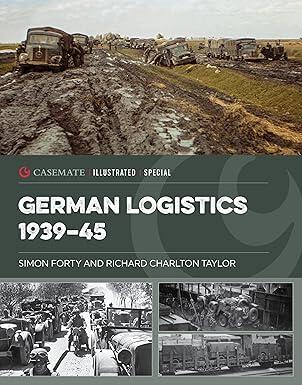
German Logistics is the latest entry in Casemate's Illustrated Special series. Most readers of my work know that I tend to recommend meaty operational histories. However, I also believe a book weighted toward illustrations, tables, and charts can also be entertaining and useful for aiding reader comprehension regarding a particular historial aspect - as long as it also contains insightful and well researched content. German Logistics checks all of those boxes.
Most importantly, authors Forty and Charlton-Taylor's work also is part of a wave of newer research showing that Germany’s losing effort in the Second World War was one powered by its faulty internal decision-making as much as it was by Allied efforts. To this end, Forty and Charlton-Taylor do much to show how much Germany's own logistical failures played a leading role in its defeat. This book amply demonstrates the importance of logistics to the outcome of the Second World War via examining the key nodes in Germany's supply and sustainment network.
The coverage is truly in-depth, with detailed looks at rail and road based supply of munitions, weapons, food, POL, and more. This is done in a very reader friendly manner - breaking down German logistical inputs into their strategic, operational, and tactical components. Key personnel (including those of great importance but not commonly known to the casual Second World War enthusiast) are also discussed, adding much to the readers understanding regarding how and where German logistical efforts were either set up for success or destined to fail. Though packed with illustrations, this is not just a picture book. It contains ample descriptions regarding how the German system of supply worked, and analysis that is not afraid to raise new points of view.
If you are visually oriented, then of course this book is packed with detail into the German equipment, and logistical machinery of war. Of particular interest to this reviewer are the sections on German rail transport, supply columns, and tank repair. However, there is much more covered as well, and this book represents an excellent starting point for understanding how German industrial output reached and powered its war machine.


Post new comment